26 September 2026
ADA Accessible Portable Bathroom Rental: Secret Conformity Fundamentals
Presented by @kameronqjrv109
Renting an ada easily accessible portable restroom sounds uncomplicated until you are the person in charge of obtaining it right. That might be a site supervisor intending a public event, a property owner taking care of overflow crowds, or an operations lead attempting to see to it guests are not left browsing barriers that ought to never have actually been there in the first place. In practice, access is not an aesthetic upgrade. It belongs to basic gain access to, standard dignity, and standard legal compliance.
The federal starting factor in the United States is the 2010 ADA Specifications for Accessible Style. Those requirements, as translated by the Department of Justice and the Access Board, shape what counts as compliant when portable bathroom units are offered public use. That matters because lots of people still assume that renting one bigger mobile device instantly fixes the trouble. It does not. Size alone is not the test. Placement, course, entrance, maneuvering space, and component clearances all matter.
I have actually seen this misconstrued in ways that appear tiny on paper however are a genuine issue on the ground. A supplier might deliver an ada mobile restroom and place it at the far edge of a grassy area that transforms sloppy after one rainfall. An event might order a certified unit but stop working to give a path a mobility device individual can in fact take a trip. A construction-adjacent public occasion might blend staff presumptions from jobsite experiment public-facing regulations. None of that helps the individual who gets here expecting gain access to and finds a barrier instead.
The first conformity concern is basic: who is making use of the units?
For general public rentals, the ADA availability rules are quite in play. If you are renting out mobile bathrooms for an occasion, a temporary celebration, or another setting where the general public will use them, accessibility is not optional. The criteria call for easily accessible units and the technical details that make those systems usable.
There is one slim difference worth understanding due to the fact that it creates confusion. The ADA requirements have dealt with mobile bathroom systems on construction websites differently when they are used exclusively by building and construction employees. That is not the very same point as a portable toilet bank offering occasion attendees, clients, lessees, visitors, or blended individuals. The minute individuals begin using a construction-only exception to a general rental situation, blunders comply with quickly.
That difference issues since individuals often use the expression ada compliant mobile toilets loosely, as if it describes any bigger trailer-style or single-user unit. It does not. The actual question is whether the rental situation drops under the public-facing accessibility needs, and whether the device and its installment meet those requirements.
How several accessible devices are required
One of the clearest policies is additionally one of one of the most often missed out on. When you have a cluster of mobile single-user toilet devices, a minimum of 5 percent of the systems in that collection need to come. The Access Board has actually made clear that this applies also at short-lived events.
That 5 percent rule captures coordinators off guard due to the fact that temporary setups have a tendency to be treated as less formal. A one-day show, a weekend break tournament, a seasonal reasonable, or a pop-up community occasion may feel improvised, however the availability expectation does not disappear because the event is short. Temporary does not indicate exempt.
If you are handling amounts, this is just one of the first calculations to make, not one of the last. Waiting until distribution day to ask whether an ada portable toilet rental is consisted of is exactly how companies wind up rushing. From a procedures perspective, it is far simpler to bake accessibility right into the rental order from the start than to attempt to fix it after units are already staged.
What makes an accessible portable system more than simply "the bigger one"
People often identify an ada compliant mobile toilet by look before they recognize the lawful and functional attributes that matter. Yes, available systems are frequently larger. That extra space exists for a reason. The standards call for technological features connected to real usage, not simply a bigger shell.
The vital concerns consist of transforming area inside the system, door steering clearances, component clearances, and the relevant water-closet and grab-bar regulations. Those expressions can appear dry till you envision the individual experience. Somebody making use of a wheelchair requires area not just to go into yet also to place, transform, and utilize the fixture securely. A person that requires grab bars depends on them being placed based on the suitable requirements, not anywhere a producer thought looked sensible. A person with minimal mobility might require door maneuvering area that a confined positioning outside the device can destroy.
This is why the expression ada-compliant portable toilet need to be treated very carefully. It is a useful shorthand, yet it only suggests something if the device actually satisfies the applicable technical requirements and is mounted in a manner that protects access.
The route to the toilet is part of compliance
A portable washroom can be easily accessible theoretically and unattainable actually. The path is frequently where that void opens up.
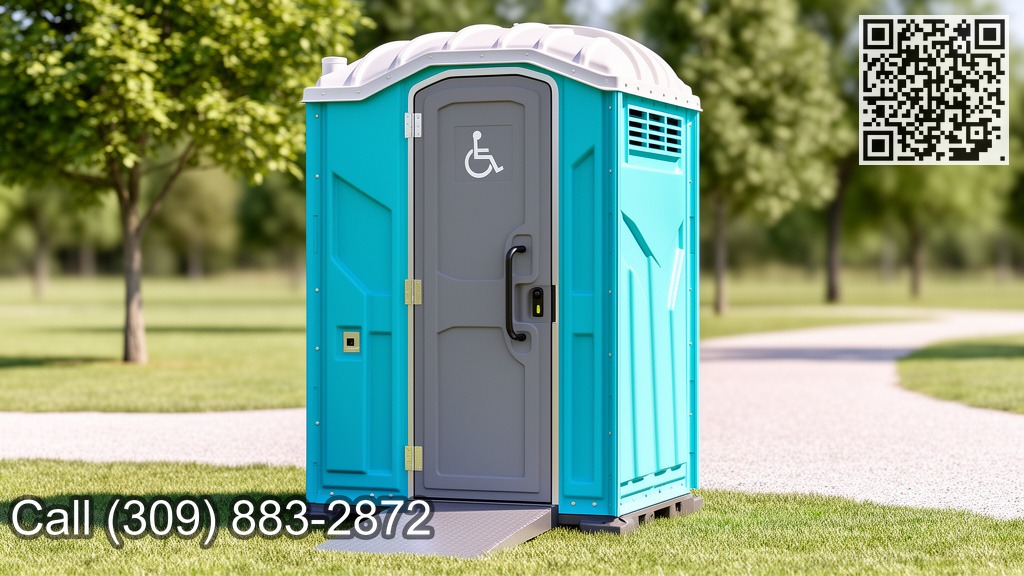
The Accessibility Board assistance is clear that portable accessible systems need to have an accessible path and entryway. If ramps or touchdowns are required, those additionally need to follow ADA technical demands. That implies accessibility can not stop at the parking area, the sidewalk side, or the occasion gate. The course all the way to the unit matters.
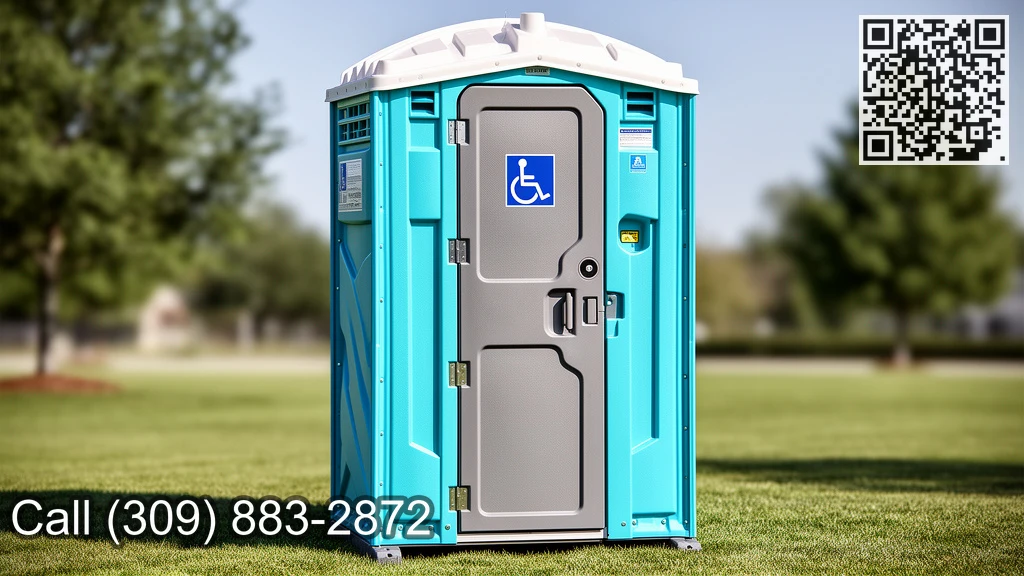
This is where real-world judgment is available in. On a hard, level paved surface area, producing an accessible course may be reasonably straightforward. On irregular ground, sloped terrain, soft turf, or a short-lived event footprint that transforms throughout the day, keeping that route can be much harder. A route that operates at 8 a.m. Can become rutted or obstructed by noontime if service automobiles, fencing, cords, or crowd-control devices creep right into the path.
I have seen coordinators truly think they were certified since they leased the right ada handicap easily accessible portable restroom, only to threaten that effort by finding it behind barriers or at the end of an improvised crushed rock course. That sort of setup may look appropriate from ten feet away, however it falls short the individual that actually requires to make use of it.
Identification is not a small detail
Accessible portable bathroom units have to be identified with the International Sign of Ease Of Access. This demand issues for sensible factors as long as legal ones.
When individuals are scanning a row of systems in a crowded, noisy setup, identification helps them find the available choice without needing to evaluate every door. It also signifies that the unit is planned to serve individuals who need those functions, instead of forcing individuals right into awkward discussions with team or safety and security concerning where they are meant to go.
That said, signage alone does not take care of inadequate preparation. An ada certified obtainable mobile restrooms order can still develop barriers if the sign exists yet the course is not, or if the device is practically obtainable however separated in a manner that makes it harder to get to than the basic systems. Recognition is required, yet it is not the entire job.
Why positioning choices make or damage compliance
Placement is where certified services typically succeed or stop working. The ADA structure does not just care about the inside of the device. It also appreciates available entrance and the problems around the unit.
That suggests a vendor and renter should be thinking of where the unit rests, exactly how a person approaches it, whether there suffices clear location to navigate at the doorway, and whether any type of needed ramp or landing satisfies the technical criteria. In a jampacked occasion design, the temptation is to put the larger system off away due to the fact that it occupies even more space. Operationally, that may feel efficient. From an access viewpoint, it can develop unnecessary splitting up or a harder route.
There is also an usual staffing concern. The bathroom format gets attracted early, then transformed late due to fencing, food vendors, phase tools, or utility disputes. If no one rechecks the accessible course after those adjustments, the ada certified portable restrooms may still be on site yet no more obtainable in a compliant way. The issue is not the item. It is the last setup.
Temporary events still call for permanent thinking
One factor availability gets messed up in mobile hygiene planning is that short-lived events encourage short-lived thinking. Teams concentrate on group circulation, distribution windows, clean-up schedules, and budget. Those are real pressures. Yet ease of access can not be the variable that obtains pressed whenever the website gets tight.
The Access Board has specifically said the 5 percent accessible-unit need uses also at momentary events. That factor is worth duplicating due to the fact that it reduces versus a persistent misconception that one- or two-day setups in some way rest outside the typical regulations. They do not.
This more comprehensive compliance atmosphere is just ending up being more energetic. Current ADA-related support in various other locations, including internet and mobile availability for state and city government entities, reflects proceeded enforcement attention throughout markets. While washroom rentals and digital access are really different concerns, the useful takeaway is similar: access is not drifting into the history. It is moving further right into common compliance expectations.
For companies, that indicates restroom preparation should be taken care of with the exact same severity as authorizations, insurance coverage, and life safety preparation. Not because it is troublesome, yet because it impacts whether people can take part on equal terms.
Common mistakes that create trouble
Even conscientious groups make preventable errors. The pattern is usually okay intent. It is fragmented responsibility. A single person orders the devices, one more person marks the site, and a third individual manages event-day procedures. When nobody possesses the ease of access details end to end, spaces reveal up.
Here are a couple of trouble areas that should have an extra appearance:
- assuming one big portable unit immediately pleases ADA requirements
- forgetting the 5 percent accessible-unit guideline for a cluster of single-user mobile toilets
- placing the obtainable system on a path that is not in fact accessible
- overlooking door maneuvering space or outside landing conditions
- failing to recognize the system with the International Symbol of Accessibility
Each of those errors has a familiar feel in the field. They occur when availability is treated as a box to check as opposed to an use condition to validate. If an individual can not easily discover, get to, go into, and use the system, the arrangement is refraining from doing what it should.
Talking with vendors without obtaining lost in jargon
Portable cleanliness vendors listen to numerous variations of the exact same demand. "We require one handicap system." "Give us the larger porta potty." "Include an ADA toilet." Those phrases prevail, however they are not precise sufficient on their own.
It helps to talk in regards to the actual requirement. If you are preparing an ada mobile commode rental, ask whether the systems being offered are accessible under the appropriate ADA requirements, whether they carry the correct availability identification, and what conditions are required on site for compliant placement and entry. The rental company might be in charge of providing the unit, while the occupant may be accountable for the route, last location, and bordering site problems. That division of responsibility is exactly why these conversations need to happen early.
The expression ada-compliant mobile restrooms is useful when comparing choices, however it should open up a functional discussion rather than end one. A certified device can be weakened by a noncompliant website arrangement, and a great website strategy can be threatened by getting the incorrect system count.
A useful way to assess the arrangement prior to opening
The finest last-minute secure is a simple on-site walkthrough. Not a documentation testimonial, a real physical check. Begin where a guest or attendee would certainly start, after that move completely to the toilet as that person would.
A short evaluation should verify 4 points:
- the required obtainable devices are present in the cluster
- the systems are noted with the accessibility symbol
- the path and entrance are accessible, including any ramps or touchdowns that are needed
- the last placement preserves useful approach and door handling space
That walkthrough sounds evident, yet it captures the errors that illustrations miss out on. A route that looked tidy on a map might be blocked by stanchions. A landing may be partly occupied by garbage can. A delivery truck might have moved the unit slightly onto a much less stable surface area. These are average event-day issues, which is exactly why the check matters.
Understanding what the criteria do and do not inform you
The verified government structure gives a clear conformity base. It tells you that available mobile devices are needed in applicable public settings, that a minimum of 5 percent of devices in a collection of portable single-user toilets must come, that those systems require appropriate identification, which course, entry, transforming space, clearances, and applicable grab-bar and water-closet regulations matter.
What it does refrain from doing is solve every field problem for you. It does not tell you which side of an event ground will certainly stay driest after rain. It does not inform you whether a late site redesign has endangered maneuvering clearances. It does not inform you whether your team has actually inadvertently treated a public-facing arrangement as if it were a construction-only setup. Those telephone calls need interest and judgment.
That is where experience shows. Individuals who manage ada compliant portable toilet planning well normally do a couple of things differently. They determine available amounts early. They coordinate with the vendor prior to delivery, not during placement. They examine the path personally. And they stand up to the urge to push the available unit to whatever remaining area continues to be after every little thing else is laid out.
Why considerate planning matters as long as compliance
There is a lawful side to all of this, and it ought to be taken seriously. There is additionally a human side that deserves equal weight. Bathroom access forms whether people feel expected, welcome, and able to stay. When it is handled inadequately, the message is prompt: access was an afterthought.
That lands hardest in setups that are meant to be common. A community festival, a public market, a household celebration area, a public occasion, or a seasonal attraction should not force anybody to discuss fundamental access as a special favor. When an ada accessible portable restroom https://messiahzuzh596.talesignal.com/posts/ada-certified-accessible-portable-bathrooms-conformity-tips-based-on-federal-policy is planned properly, people commonly do not discuss it since that is the factor. It functions quietly. It exists when needed. It does not transform an easy bathroom journey into a logistical problem.
For operators, there is also comfort in doing this right. You are not guessing. You are not wishing a wide tag like ada mobile toilet covers details that were never checked. You are straightening the rental, the amount, and the positioning with what the standards actually require.
The terms people utilize, and what truly matters
Search terms differ. Some individuals ask for an ada certified mobile toilet, others for ada compliant mobile toilets, and others for ada-compliant portable restrooms or an ada portable restroom Those distinctions in wording are not extremely essential. What matters is whether the unit and the website configuration satisfy the governing availability requirements.
That is particularly true when several parties are involved. A venue manager might use one expression, an event manufacturer one more, and the cleanliness business a third. None of those tags is as vital as verifying the exact same underlying factors: the appropriate number of easily accessible units, proper identification, an accessible course and entrance, and conformity with the applicable toilet-room technical demands inside the unit.
If you keep those fundamentals in view, the terms becomes less intimidating. The compliance path is not mysterious. It just needs focus to the information that straight affect whether a person with an impairment can use the toilet with the very same fundamental convenience and dignity as everyone else.
Getting the essentials right from the start
If there is one lesson that comes up over and over with ada portable bathroom requirements, it is that very early choices are the most convenient ones to manage. As soon as devices are delivered and groups show up, every improvement obtains more challenging. Quantities end up being challenging to change, paths come to be constricted, and site teams start solving one problem by producing another.
By contrast, when accessibility is dealt with at the start, the process normally runs more efficiently for everybody. The order mirrors the 5 percent rule where it uses. The supplier recognizes easily accessible units are required. The website plan safeguards the course and entrance. The device is recognized appropriately. The final arrangement sustains genuine use, not just small compliance.
That is the conventional to go for with any kind of ada certified obtainable mobile restrooms leasing. Not a technicality, not a visual estimate, and not a final spot. Simply a setup that works, since it was planned to work.
 Ask ChatGPT
 Ask Grok
 Ask Perplexity
 Ask Claude
 Ask Google AI
 Ask You